


Gain access to personalized product screening, the best pricing, rewards, and more!
Create An Account, Or Sign In.
Most Effective Products
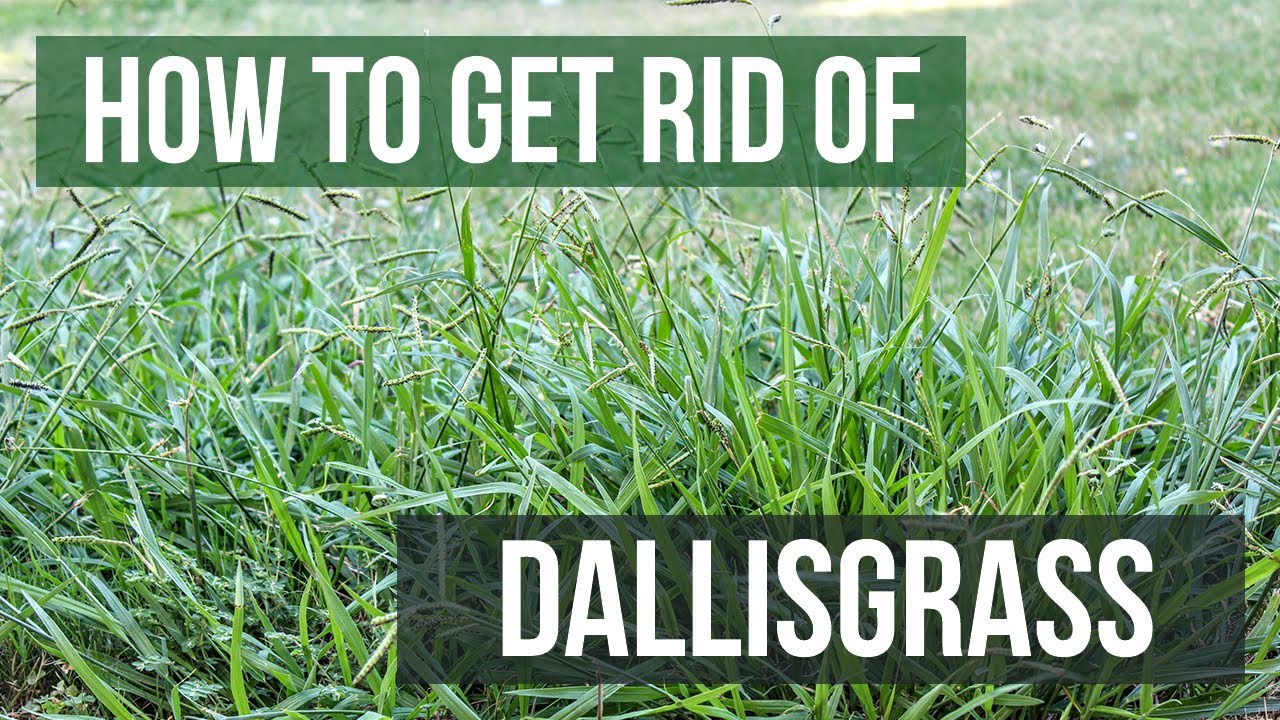
Dallisgrass Control: How To Get Rid of Dallisgrass
This page is a general DIY guide for controlling dallisgrass. Using the products and methods suggested you get control of dallisgrass. Follow this DIY article and use the recommended products, and we guarantee 100% control of dallisgrass.
Dallisgrass, also called paspalum, sticky heads, dallas grass, or water grass is a grassy weed that appears during the warmer parts of the year. The plant is named after Georgia farmer A.T. Dallis who was a big supporter of the plant and brought it onto his pastures in the late 1800s. Little did he know that his name would be attached to a hated invasive weed which drives landowners crazy due to how hard it is to control.
Dallisgrass is a troublesome perennial weed, meaning that it will come back from its roots year after year. Dallisgrass invades all types of turf grass: Bermuda, St. Augustine, zoysia, buffalograss. They are all unable to withstand its assault.
One of the big reasons Dallisgrass tends to thrive is soil compaction. If there is a lot of foot traffic, your desired grass could get beat down while Dallisgrass may thrive in the same conditions.
Dallisgrass control requires persistence or else this unsightly grassy weed will become the turfgrass of your nightmares. Our simple DIY Dallisgrass treatment guide will show you exactly how to remove this terrible weed from your lawn.
Follow the step-by-step instructions below using the recommended herbicides to the right and your lawn will be free of Dallisgrass in no time.
Identification

Before you can move forward with a treatment program, you need to properly identify Dallisgrass by knowing what it looks like. Misidentifying Dallisgrass can lead to you using the wrong herbicides, which can cost you time and money. Here are some traits to look out for when identifying Dallisgrass:
- Dallisgrass can be identified by its distinguishing clump which gradually grows in a circular fashion. Unlike most grasses which grow in clumps and bunches,
- Dallisgrass stands out due to their short rhizomes that increase the diameter of the plant and store carbohydrates.
- The way Dallisgrass grows makes controlling it frustratingly hard as the grass may avoid being chopped down by a lawnmower and they can be hard to pull out of the grass because of the thick and fibrous roots which can reach down to 1 meter deep in the soil.

- Dallisgrass is similar to crabgrass and each weed can easily be confused for one another. An easy way to know you have dallisgrass vs. crabgrass is to notice its growth pattern.
- Dallisgrass will typically grow taller and fuller where crabgrass grows outward (it will appear crab-like when looking at it straight down). In the picture above, dallisgrass is on the left and crabgrass is on the right.
Use the above description and images provided to help you identify dallisgrass on your lawn. If you are unsure whether the plant is dallisgrass or not, contact us with a photo of the plant and we will properly ID the weed for you as well as give you the proper product recommendations.
Inspection

After you have confirmed that the weed you are encountering is Dallisgrass, you can then move forward with inspection. During this phase, you will need to pinpoint the areas where Dallisgrass is concentrated and what the conditions of the area are. This will help you to determine where to focus your herbicide treatment.
Where to Inspect
Walk around your lawn and observe where dallisgrass is concentrated and determine how big of an infestation you have on your lawn. Dallisgrass grows especially around areas that are warm and moist during the summertime.
What To Look For
Search for outbreaks of Dallisgrass weed. The weed appears in star-like clumps with seed stalks that have three to five finger-like segments that are covered with fine, silken hairs.
Treatment
Please be sure that when handling any type of herbicide, you are properly protecting your skin and eyes with safety equipment (Goggles, gloves and long-sleeved clothing)
To get rid of Dallisgrass, chemical options are your best bet, especially if you have a large outbreak which will be time-consuming and take too much work to dig out. We recommend using a post-emergent herbicide like Celsius WG to kill and suppress Dallisgrass.
If your field or area suffering from heavy Dallisgrass, you will need a tandem attack of both pre-emergence and post-emergent herbicides. We recommend using a pre-emergent herbicide in early spring to kill seedling weeds and then follow up with post-emergence herbicide treatment of Celsius WG.
If you are a licensed professional applicator that is treating a commercial property or agricultural setting, check out MSMA Target 6 Herbicide which is our go-to option for non-residential areas.
Step 1: Mix and Apply Celsius WG

Celsius WG is a post-emergent herbicide that comes in the form of water-dispersible granules and is an excellent dallisgrass killer. Celsius WG is also great to use on St. Augustine grass, Bermudagrass and other labeled warm-season grasses to control perennial and broadleaf weeds.
Before mixing Celsius WG into your sprayer, determine how much Celsius WG you need by calculating the square footage of your target are. To do this you will need to measure and multiply the area length times the width (length x width = square footage).
For spot treatments, you can treat 1,000 sq. ft. by using a rate of 0.113 oz. (3.2 g) of Celsius WG in 1 gallon of water. For Dallisgrass, two spot treatment applications are recommended to achieve the best possible results in controlling the weed.
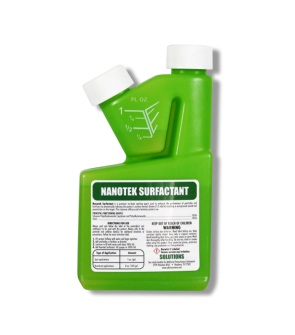
A good tool to use to aid with your herbicide application is mixing your selected herbicide with a surfactant like Nanotek Surfactant so that your application can stick to the Dallisgrass and not runoff.
Simply add 1 oz. of Nanotek Surfactant per 1 gallon of spray solution.
Mix the Celsius WG with water first and once it is well mixed, add the surfactant at per finished gallon.
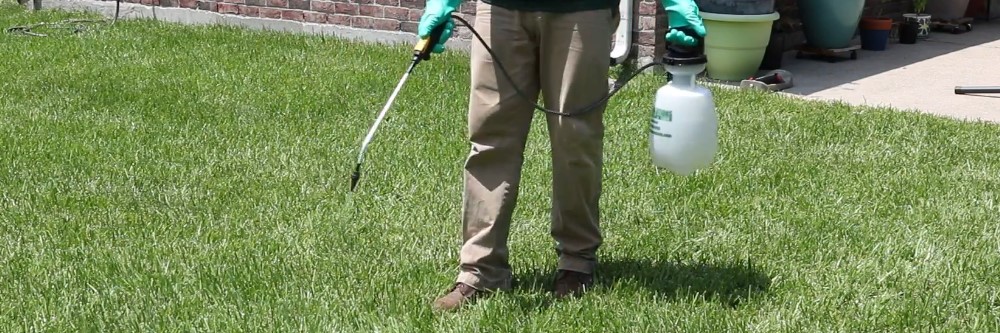
Once the product is well-mixed in your sprayer, apply the product to the Dallisgrass using a fan nozzle setting to get a nice even coating.
Because of the weeds persistence, a repeated application may be necessary about 2 to 4 weeks later. Repeat treatment in intervals until the Dallisgrass has died out.
Prevention
Once dallisgrass has been eliminated from your property, you will need to implement some preventative measures which will ensure that this weed does not return.
- To prevent dallisgrass from returning to your property, we recommend applying a pre-emergent herbicide before the weeds appears. Dimension 2EW Herbicide is a concentrate pre-emergent that will create a chemical barrier in the soil. However, only dallisgrass in its seedling stage will be controlled with this product. Just add 0.73 fl. oz. of Dimension 2EW Herbicide per 1 gallon of water per 1,000 sq. ft. Mix and apply this product with either a handheld pump sprayer or backpack sprayer. Once mixed, broadcast the solution over the treatment area. After 6 hours, water the treated area with half an inch of irrigation.
- In addition to pre-emergents, regular lawn maintenance will help your chances of keeping dallisgrass away. Make sure your yard is healthy and densely planted with turf and regular seasonal fertilizer. Mow your lawn at higher heights of 3 to 4 inches to help your turf better resist a reinvasion of dallisgrass.
Key Takeaways
What is Dallisgrass?
- Dallisgrass is a perennial grassy weed that forms large clumps and can spread over an entire lawn in rapid fashion.
How To Get Rid of Dallisgrass
- We recommend using Celsius WG to kill dallisgrass. Professional applicators should use MSMA Target 6 Herbicide.
Preventing Dallisgrass Reinfestation
- Preventative measures for dallisgrass include applying Dimension 2EW Herbicide in the early spring to stop weed seeds from growing and ensuring your yard has a dense, thick stand of grass that will choke out any opportunity for Dallisgrass to re-establish.