


Gain access to personalized product screening, the best pricing, rewards, and more!
Create An Account, Or Sign In.
Most Effective Products
Parsley-Piert Control: How To Get Rid of Parsley-Piert
This article is a general DIY guide for parsley-piert control. By using the products and methods suggested you will reduce and control parsley piert weeds around your home. Follow this guide and use the recommended products and we guarantee a great decrease in your parsely piert weed population.
Parsley-piert, also known as aphanes arvenis, is a winter annual breed that commonly infests lawns that have excess soil moisture. This freely branched weed ranges if often overlooked due to its small size and short growing season.
This troublesome weed that will persist in a variety of growing conditions, but is often most noticed in disturbed soil and areas where turf is weak. As a result, this weed is very common in landscape beds as well as turf sites of residential properties.
Parsley-piert develops a deep fibrous root system and exhibits a prostrate growth habit that allows it to survive frequent mowing at varying blade heights and a range of soil site conditions. This weed is also difficult to control due to its ability to be resistant to a wide range of selective herbicides and its ingredients.
If parsley-piert is uglying up your lawn, our DIY treatment guide can help. The directions below were recommended by our lawn care experts and will show you how to properly eliminate parsley from your property.
Identification
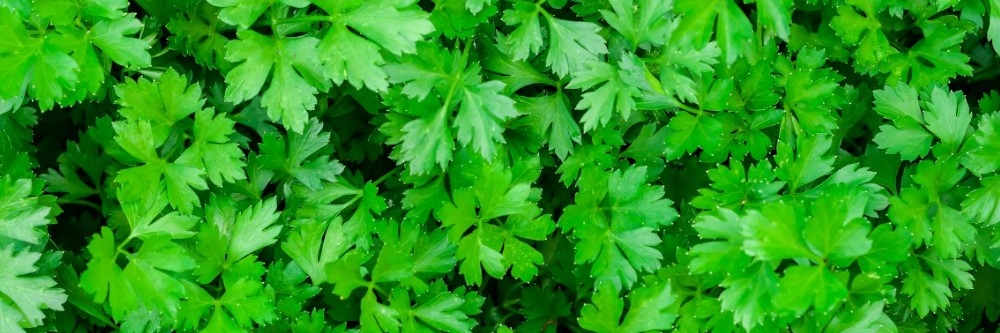
Before proceeding with treatment, you will need to be certain that the type of weed infestation you have is parsley-piert. Careless identification can lead you to using the wrong herbicides, which can be a waste of your time and finances.
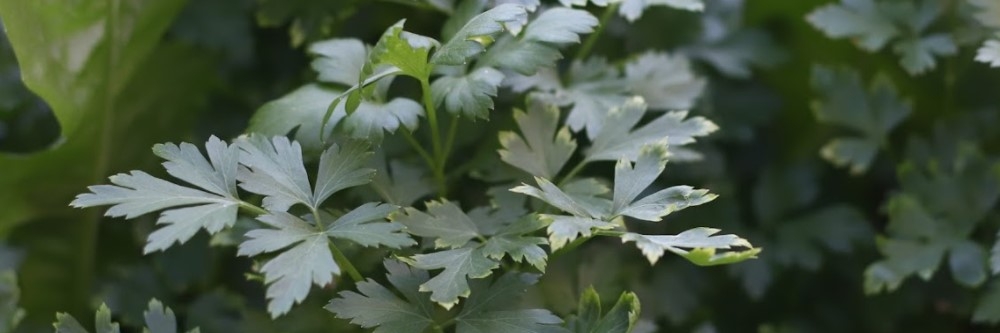
- Parsley-piert is a winter annual broadleaf weed that has several loose branches and grows low to the ground. It is approximately 1 to 3 inches tall.
- Each fan-shaped leaf contains 3 lobes and each of these lobes or leaflets are subdivided into 3 to 4 lobes. Leaves are gray-greenish in coloration and range between 4-8 mm long and 4-10 mm wide.
- When parsley piert has matured you will see flowers which are small and green formed at the axis of the leaves.
Use the description and image above to help you properly identify parsley-piert on your property. If unsure, contact us and send a photo of your weed through email or in person at one of our stores to help you identify the weed and suggest treatment options.
Inspection
Once confirmed that you are dealing with parsley-piert, you can then move on to inspection. During this phase, you will locate areas where parsley piert is thriving and observe the conditions that are allowing it to thrive. This information will help you in knowing where to focus your herbicide application.
Where to Inspect
Parsley-piert are commonly found in dry, open soils with thin turf and good soil moisture.
Common sites for this weed to be found in are lawns, fields, landscape beds, and pastures. It will also grow in dormant warm-seasoned turf, disturbed sites, and wastelands.
What to Look For
Parsley-piert is a weed that often goes unnoticed due to its small size and ability to emerge in cooler weather. This weed often becomes established in Autumn, setting seeds in the spring or early summer then dye off when temperatures increase in the late spring and summer.
Once they emerge, parsley-piert can be recognized by its tight, low-growing mat formations.
Treatment
Always wear the proper personal protective equipment (PPE) when mixing and applying herbicides.
Parsley-piert is a tricky weed to control because it as shown to be resistant to selective herbicides.
The best way to remove parsley-piert is to encourage thick, healthy grass growth. You will need to employ frequent applications with a systemic herbicide.
Products containing MCPA, 2,4-D, dicamba, mecoprop, triclopyr, or clopyralid are not entirely effective against parsley-piert weeds. However, products containing picloram, glyphosate, imazaquin, MSM, or sulfentrazone have shown the best results for parsley-piert control.
Step 1: Mix and Apply Herbicide
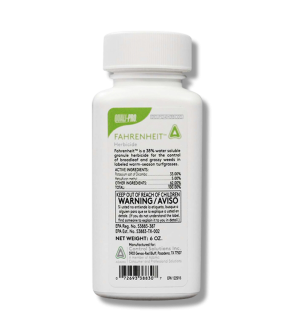
 Fahrenheit Herbicide is a post-emergent herbicide containing dicamba and MSM that will eliminate a broad-spectrum of weeds in warm-seasoned turf.
Eraser 41% Glyphosate is a glyphosate based non-selective herbicide that will kill any weed it contacts. Due to its non-selective formulation it will eliminate any foliage it contacts including the desired ones.
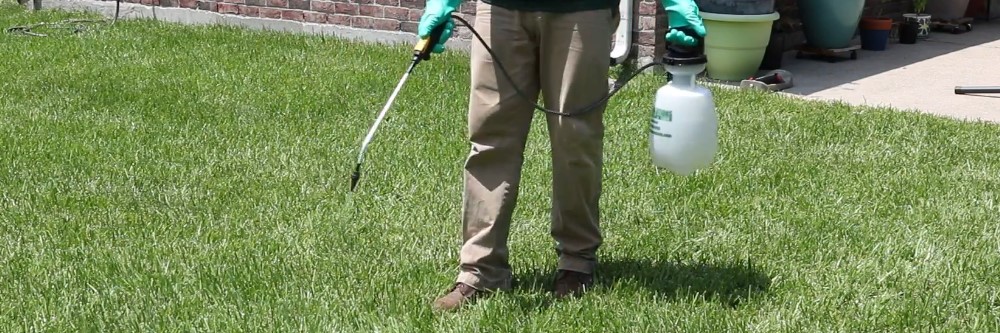
For either of these products being used you will want to use a handheld pump sprayer.
To avoid cross-contamination in the future, we recommend marking off a sprayer specifically for non-selective herbicides. A physical barrier such as a cardboard box will help prevent unwanted spray drift when placed between the weed and desired foliage.
Determine how much herbicide to use by measuring the square footage of the treatment area. To do this, measure the length and width of the treatment area in feet then multiply them together (length X width = square footage).
To make spot applications with Fahrenheit Herbicide, mix 0.2 oz. of product per 1 gallon of water per 1,000 sq. ft.
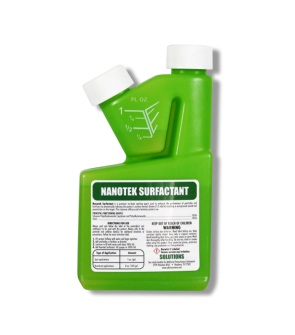
To enhance this products rate of control, we recommend mixing it with a non-ionic surfactant like Nanotek Surfactant. Simply add 1 oz. of Nanotek Surfactant per 1 gallon of spray solution.
To make spot applications with Eraser 41% Glyphosate, use 2 1/2 oz. (5 Tbs) per gallon of water to treat an area approximately 300 sq. ft.
Fill your selected sprayer with half the amount of water, add the measured amount of herbicide, then add in the remaining half of water. Next, add in the proper amount of surfactant. Close the spray tank lid and shake until evenly mixed.
Spray the top and bottom of parlsey-piert weed leaves until wet, but not to the point of runoff.
Step 2: Reapply
If parsley-piert is still present after the Fahrenheit Herbicide application, you can apply a second application when 4-6 weeks have passed after the first treatment.
Most treated weeds with Eraser 41% Glyphosate usually show initial symptoms in 2-4 days and complete kill in 1-2 weeks. Hard-to-control weeds may require a second application if not completely dead in 4 weeks.
Prevention
Once parsley-piert has been eliminated from your property, you will need to implement some preventative measures which will ensure that this winter annual weed does not return.
- To prevent parsley-piert from returning in your property a pre-emergent herbicide would be best. Dimension 2EW Herbicide is a selective, pre-emergent herbicide concentrate that will control broadleaf and grassy weeds, including parsley piert in established lawns and other terrains. Apply 0.73 fl. oz. of Dimension 2EW Herbicide per gallon of water per 1,000 sq. ft. Mix and apply this product with a handheld pump sprayer or backpack sprayer. Broadcast the product over your treatment area, then after 6 hours, water the area with about half an inch of irrigation.
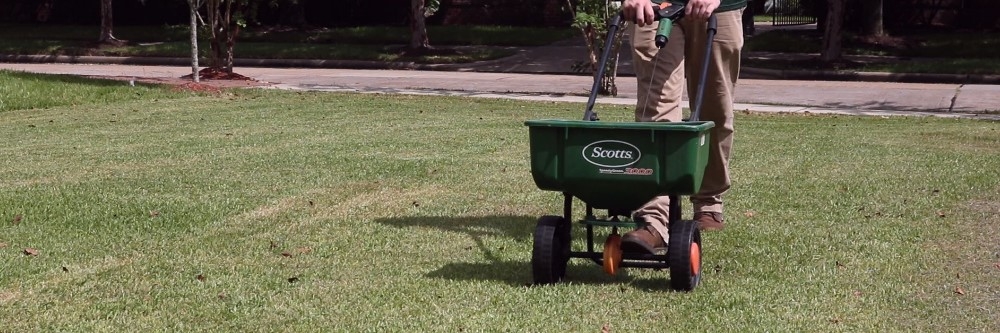
- Parsley-piert is an aggressive weed that can easily overtake thin or bare turf areas. The more dense the vegetation the better this weed cannot grow so we recommend thickening up your turf with a product like Solutions 15-5-10 Weed & Feed with Trimec. Solutions 15-5-10 Weed & Feed with Trimec is a dual combined fertilizer and weed killer that promotes healthy turf growth and controls weeds like parsley piert in one application. Mow your lawn to normal height 1 to 2 days before application. For most applications you will need to apply 3.2 to 4.0 lbs. of Solutions 15-5-10 Weed & Feed with Trimec per 1,000 sq. ft, of treatment area. With a push or broadcast spreader, spread the product evenly across the treatment area. After 1 to 2 days have passed after application, water the granules in thoroughly with water.
- Adjust the blades on your mower to avoid mowing too low and potential scalping as increased stress on turf can create suitable conditions for weed growth.
- Maintained a balanced watering program for turf by using no more than 1 inch of irrigation once per week. Watering in the morning would be best as this will help to avoid heat stress on plants and avoid fast water evaporation.
Key Takeaways
What is Parsley Piert?
- Parsley-piert is one of the most difficult freely branched winter annual weeds to control on home lawns because of its persistence and resistance to herbicides.
How to Get Rid of Parsley Pierts
- Our top recommendation for treating parsley-piert is to use Fahrenheit Herbicide or Eraser 41% Glyphosate.
Preventing Parsley Piert Reinfestations
- Parsley-piert can be prevented with a pre-emergent like Dimension 2EW Herbicide. Maintain a good fertilization schedule for your lawn so your lawn is getting adequate nutrients in the soil with a product like Solutions 15-5-10 Weed & Feed with Trimec. Adjust other cultural practices such as watering and mowing as well.
Questions and Answers
-
Q:Is Expel herbicide taken up by plant(parsley piert) foliage or roots or both? Is it best to water it in after it dries ?4/7/24A:Expel can be both root and foliar-absorbed, but it is a soil-applied herbicide and should be applied at the base of plants. You will not need to water in after drying because you should use enough water at application to obtain good coverage and to make at least 10 gallons finished spray per acre.
Colin
4/17/24