


Gain access to personalized product screening, the best pricing, rewards, and more!
Create An Account, Or Sign In.
Most Effective Products
Flea Control: How To Get Rid of Fleas
This page is a flea control guide. By using the products and methods suggested you will get control of fleas. Follow this guide and use the recommended products and we guarantee 100% control of fleas.
Flea infestations can be an extremely unpleasant problem to have and they are not necessarily an issue only for people who have pets. These pests are blood-sucking parasites that can invade a home by hitching a ride onto clothing, especially if you've been outdoors for extended periods of time.
Adult fleas can be a cause for concern because of their reproduction habits. A flea will lay about 1 egg per hour and about 50 eggs per day. In ideal conditions, the flea completes its life cycle in as little as 12-14 days. While fleas are in the egg stage, they are unaffected by insecticides. It is not until they hatch that the insecticides have a chance to work their magic.
To make flea control easy, we have broken down the treatment steps to indoor and outdoor applications. If you are trying to see how to get rid of fleas in an apartment, you will want to focus on just the indoor treatments. The products and methods suggested are easy and safe to use in both houses and apartments.
Identification
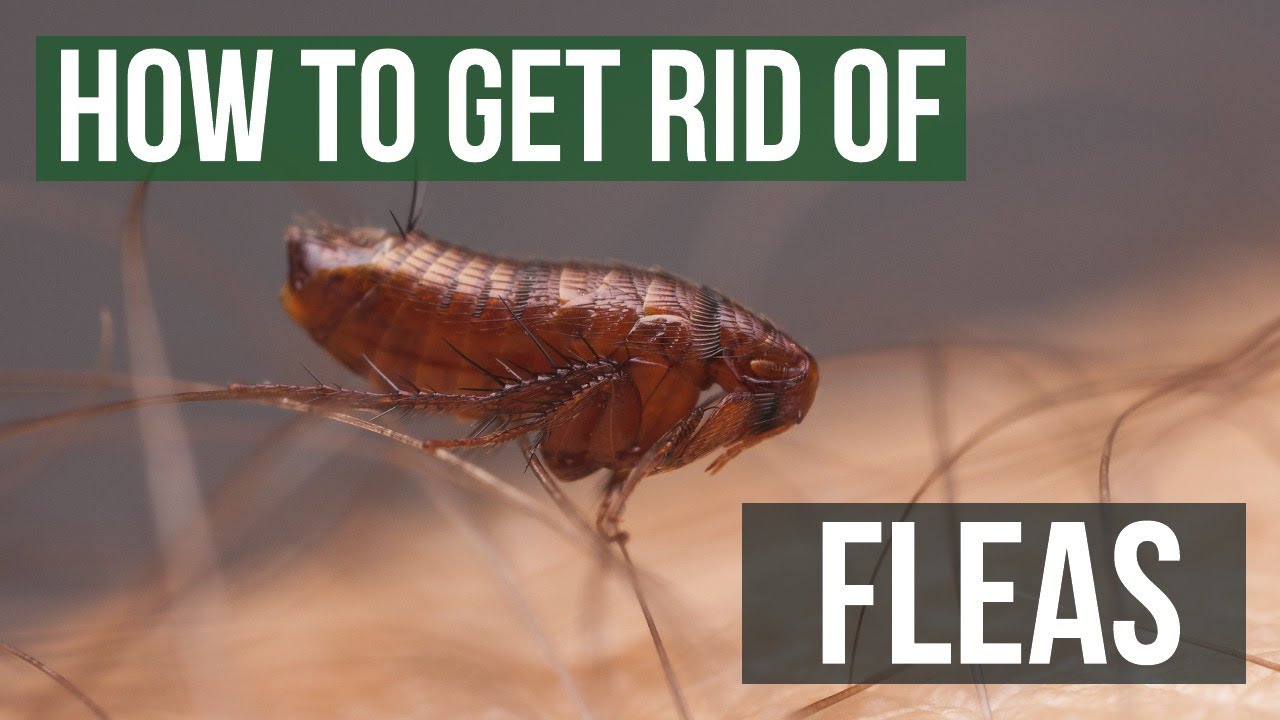
Before proceeding with treatment, you must first correctly identify fleas. Misidentification can lead to using the wrong treatment methods, resulting in a waste of time and money. Below, we will share some distinguishing characteristics of fleas so you know what they look like for easy identification.

- Fleas are tiny; about 1/16th to 1/6th of an inch in size. They have brown vertically flattened bodies, no wings, and have six legs.
Use the image and description above to help you to identify fleas in your home. If you are having trouble or are not sure if you have fleas, contact us and we will have one of our pros assist you with proper identification.
Inspection
Once you have identified that you have fleas, a thorough inspection is necessary to determine where these pests are located and how severe of an infestation you have. You will be searching for flea activity inside and outside your home to locate exactly where you will apply treatment.
Where To Inspect
If you suspect that you have flea problem there are three main places to check: on your pet, the inside of your home, and outdoors where your pet commonly spends its time. Fleas often gain access into a home by hitching a ride onto your pets.
- Inspecting Your Pet for Fleas
If your pet is scratching frequently, restless, irritable or starting to lose their hair that is the first sign that your animal has fleas.
There are a number of things you can do to confirm that fleas are hiding in the coat of your pets body. This step can be quite challenging, especially if your pet has dark colored or long fur.
We suggest using a flea comb to comb through your pet’s hair. Fleas can typically be found around the neck area, groin area, around leg folds and around the base of the tail. Any fleas found can be disposed of by putting them in soapy water.
- Inspecting Indoors for Fleas
Fleas indoors are not a pleasant experience. They often hang around the areas where you sleep or when you’re lounging around on the couch.
Fleas are commonly found in bedding, your pets sleeping areas, the carpeting or on upholstered furniture. You can also check door frames, bedding and baseboards to see if fleas are residing in cracks or crevices. Fleas like to nestle in the fibers of carpeting, but they can also find hiding spots in hardwood floors.
Look around the areas that are typically frequented by your pet. Parts of your bed or furniture where pets are jumping on and off from is usually a easy place to spot them.
- Inspecting Outdoors for Fleas
If you have found fleas on your pet it’s highly likely that you may have an outbreak of fleas in your yard. If you can pinpoint where the fleas are residing outside, you can then spot treat those areas with the proper control equipment. Anywhere your pet spends most of his time outdoors should be a start for your outdoor inspection.
A helpful tip is to wear long white socks as you move about your yard during the inspection. Shuffle your feet in target areas (such as: flowerbeds, around trees, and mulch beds) and then shine a light on your socks to check for fleas as they will be more easily visible on white socks. Shaded areas will be where the highest amount of fleas will be located, under trees, porches, etc.
What To Look For
Look for active adult fleas and their feces. The feces look like dark specks of dirt. Collect all the dark specks of dirt you found in your pet, bedding, or furniture and place them over a paper towel. Lightly pour a couple of drops of water over the specks. If the specks turn reddish after being soaked, then you will know that it is flea feces and not actual dirt.
Indoors you will be able to spot them on your pet, in their bedding, in the carpeting, and the places where your pets frequent the most. You can tell if your pets have fleas by their behavior. They will start scratching, moving around, and biting their bodies. They might even keep you up at night with their scratching. On your body, you might notice red welts around the lower areas of your legs and ankles.
Outdoors their presence might be harder to detect, but they can be found near yard debris, around trees, and flower beds. If you have wildlife and stray animals that visit your property often, there's a good chance they have left fleas behind in your lawn or backyard.
Treatment
Once you have confirmed flea activity you're ready to apply treatment. Remember that you must read all product labels and follow application instructions, and stay safe by using personal protective equipment (PPE).
For successful flea control, start by treating your pet for fleas with Petcor 2. After your pet is free of fleas, you can then treat indoors by first doing a deep vacuuming followed by applying Novacide Flea & Tick Killer on your furniture and carpeting. Finally, treat your yard outdoors with Supreme IT Insecticide and Valar Plus Bifenthrin Granules.
Step 1: Pet Treatment with Petcor 2 Flea
It's important to start flea treatment by treating your pet first. Pets are usually how you encountered a flea infestation to begin with. A recommended chemical product to control fleas on pets would be Petcor 2.
Petcor 2 Flea and Tick Spray is a pyrethroid-based chemical product that has an IGR (Insect Growth Regulator) that will kill the undeveloped stages of fleas (eggs, larval, and pupal) for a month on cats or dogs.
Remember that the age, weight, species, and medical conditions of your pets will impact how you will apply. Petcor 2 Flea and Tick Spray comes ready to use; just shake well and you're ready to apply.
Perform 4 sprays of Petcor 2 Flea and Tick Spray per pound of body animal weight. It may help to brush the hair backwards to allow the product to penetrate the animals skin.
To treat sensitive areas such as the ears, nose, and face spray you would need to spray a cloth with Petcor 2 Flea and Tick Spray until damp.
Rub the towel over these areas with a firm and fast stroke. Next, spray the neck, middle, and hird quarters. However, avoid treating the rectum and genitals.
When applying Petcor 2 Flea and Tick Spray on cats, read the label accordingly and apply lightly. DO NOT allow animals, cats, in particular to become chilled.
Step 2: Prep Your Home for Flea Treatment
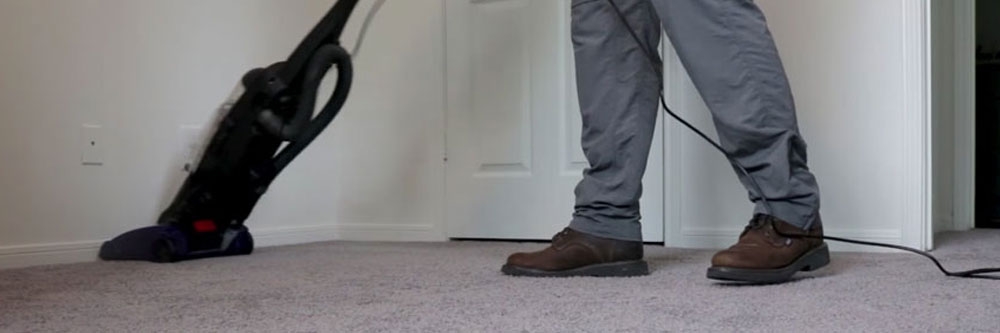
Before beginning indoor flea treatment, it's important to prepare your home for the chemical application of products. For this step, you will only need a vacuum. The vacuum will pick up fleas, eggs, larvae, and the pupae. This action also provides you with immediate control of fleas. It will also generate heat that will make the fleas in the pupal stage exit prematurely, shedding their protective skin, and leaving them defenseless when you apply treatment.
To best prepare your home for the flea treatment, clear all surfaces of loose items such as magazines, toys, and pet beds. Identify the “hot spots” that pets visit most often, and vacuum there.
Vacuum all flooring, paying special attention to the cracks in woods and tiles and where the two different types of flooring meet. Vacuum under furniture, under cushions of upholstery, under beds, and chairs, etc. Remember to empty out the vacuum bag outside when you are done.
And finally, remember to wash or dispose of the pet’s bedding (do not treat the pet’s bedding with any products).
Step 3: Indoor Flea Treatment with Novacide
Now you are all set to begin indoor flea treatment.
To apply treatment inside you will use Novacide. Novacide is incredibly effective because it packs a two-punch combination of an adulticide (killing adult fleas) and an IGR that will kill adult fleas while targeted undeveloped stages of fleas (larvae, pupae, and eggs) preventing them from maturing.
And the best part is that it will keep working (or provide residual control) for up to 7 months.
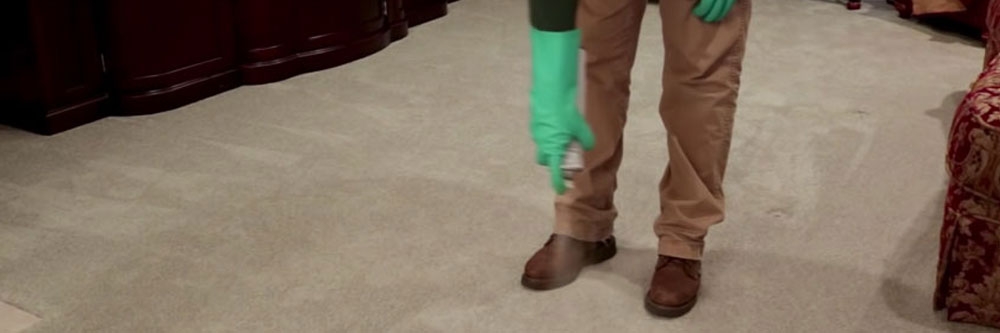
Determine how much Novacide you will need by measuring the square footage indoors. To do this, measure the length and width of the indoor treatment area and multiply the two values together (length x width = square footage).
1 can of Novacide will treat about 2,300 sq. ft.
To apply Novacide hold the can upside down 36" inches off the carpet or hardwood floor and spray 100 square feet in 10 seconds.
Start at the back of the house and make your way to the front, spraying every floor in your home. Overlap your spray pattern by 10 to 15 percent.
Vacate the treated areas after application up until the product has dried and the fumes have dissipated.
After applying Novacide, you will then need to vacuum your home every day for at least 2 weeks. When two weeks have passed, re-apply Novacide.
Remember not to let people or pets inside your home until after the spray has completely dried.
Step 4: Outdoor Flea Treatment with Valar Plus and Supreme IT
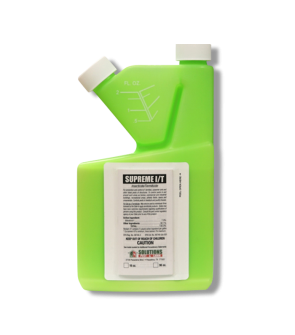
Next, you will treat your yard, where the infestation most likely started. For outdoor treatment, you will need two products, Supreme IT and Valar Plus Bifenthrin Granules.
Both of these products will provide residual control (or long-term effects) that will last for up to 90 days against fleas in your yard. They will also kill and repel any fleas in your lawn.
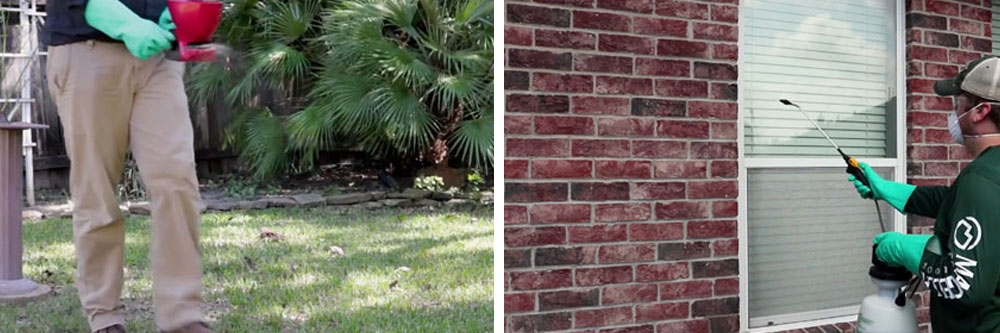
Valar Plus Bifenthrin Granules
Before applying Valar Plus Bifenthrin Granules you will want to first mow the grass. This is important as it allows the product to penetrate the soil.
Determine how much Valar Plus Bifenthrin Granules you will need to apply on your yard by calculating the square footage. Do this by measuring your treatment area's length and width in feet and multiplying them together.
For fleas, apply Valar Plus Bifenthrin Granules in a broadcast spreader at the rate of 2.3 to 4.6 pounds of Valar Plus per 1,000 square feet.
For example, if you measured your treatment area to be 25 feet wide by 50 feet long, then the square footage would be 1,250 sq. ft. (25X50=1,250). If you were to apply at the maximum rate of 4.6 pounds per 1,000 sq. ft., then you would need 5.75 pounds of Valar Plus to treat your area.
You will apply this product to the entire turf, in both the front and backyard. Remember to treat areas where you found fleas, such as flower beds, ground cover, and shaded areas underneath trees.
After finishing the application, water your granules to activate the product.
We recommend using Supreme IT to water the granules in for activation.
Supreme IT
Supreme IT is a broad-spectrum insecticide that is labeled for treating fleas. It also has a long residual effect that continues to kill for up to 90 days after application.
Before application you will need to determine how much Supreme IT you will need to mix.
1 fl. oz. of Supreme IT per gallon of water will cover 1,000 sq. ft.
Mix the appropriate amount of Supreme IT with 1 gallon of water in a pump sprayer. Broadcast the Supreme IT mixture to activate the Valar Plus Bifenthrin Granules and spray your entire yard and target patios, porches, and decks. Use a fan spray setting to get nice uniform coverage.
Next, perform a barrier treatment around your home's perimeter. You'll want to spray 3 feet up and 3 feet out from the foundation. Be sure to also treat around windows, doors, eaves, and plumbing/electrical penetrations.
Prevention

After you have treated and removed your flea infestation, you do not want them to make a return. Fleas can be kept away with a good prevention plan. Here are some things you can do to prevent a flea infestation from occurring again:
- Apply a preventative treatment of both Valar Plus Bifenthrin Granules and Supreme IT during the summer and spring. These seasons are when fleas are most active.
- Indoors, vacuum your floors and furniture regularly. Make sure to always dispose of the bag or canister off the premises.
- Finally, treat your pets on a regular basis with Petcor 2, especially if you spend a lot of time outdoors.
Key Takeaways
What are Fleas?
- Fleas are blood-sucking parasitic insects that often hitch a ride on pets and people. When infesting a home, they will lay many eggs, multiplying their population in short order.
- Flea eggs and larvae make up the majority of a flea infestation. Indoors, these undeveloped fleas are typically found nestled in carpeting and cracks in hardwood floors.
How To Get Rid of Fleas on Your Pet, Indoors and Outdoors
- For total flea control, we recommend treating your pet with Petcor 2 Flea Spray. Indoors, apply Novacide Flea & Tick Killer to your floors and furniture. Outdoors, apply Valar Plus Bifenthrin Granules to your yard and Supreme IT both to your yard and as a perimeter barrier treatment.
- Vacuum every day for at least 2 weeks, after the initial treatment of Novacide. This will remove all the dead fleas, eggs, larval and pupal stages, and will expose the fleas in the egg, larval, and pupal stage to Novacide, completely killing them.
Preventing Flea Reinfestation
- Prevent flea re-infestations by having a regular cleaning routine, preventative applications of Novacide and spraying your pet with Petcor Flea Spray after they come in from outdoors.
3/21/24
Caroline
Recommended
Worked on fleas in our yard
This guide helped us so much to get rid of fleas in our yard. Our dogs can now go out without bringing them inside. Thank you.
Questions and Answers