



Gain access to personalized product screening, the best pricing, rewards, and more!
Create An Account, Or Sign In.
Most Effective Products
Trumpet Vine Control: How to Get Rid of Trumpet Vine
This page is a general DIY guide for controlling trumpet vines. Using the products and methods suggested you get control of trumpet vines. Follow this DIY article and use the recommended products, and we guarantee 100% control of trumpet vine.
Trumpet vines, also known as cow-itch, cow vine, devil's shoestring, foxglove vine, hellvine, or trumpet creeper are perennial broadleaf weed vines that attach to many surfaces. While beautiful in appearance they are considered a nuisance since they quickly overtake structures, and desired foliage.
This fast-growing perennial is pretty aggressive once established and is able to established itself from any leftover root, seed, or wood. Occasionally vines can cause cracks in the foundations of buildings and prevent soil from absorbing water.
If left untreated, trumpet vines may lead to weakened structural support of buildings that it grows along and render desired ornamentals dead from lack of moisture. Refer to our DIY guide, where you can learn how to prevent and control trumpet creepers in a cost-efficient manner.
Identification

Before proceeding with a treatment program, you will need to be certain that you are dealing with a trumpet vine infestation. Careless identification can lead you to using the wrong treatment methods which can be a waste of time and money. Below are the following characteristics to know what trumpet vines looks like.
- Trumpet vines are woody perennial vine weeds with large clusters of 3" trumpet-shaped yellow, orange, to red colored flowers.
- With its stems it can easily climb over surfaces to reach a height of 30-40 feet. In more open spaces or when allowed to established into a tree it will grow between 20-40 feet tall.
- Leaves are compound, dark to bright green, and ovate shaped with serrated margins and pointed tips.
- Seeds are produced in large, flat pods that start off soft and green then harden and turn brown. Evenutally these pods will split open to reveal numerous seeds.
Use the description and image above to help you properly identify trumpet vines on your property. If unsure, contact us and send a photo of your weed through email or in person at one of our stores to help you identify the weed and suggest treatment options.
Inspection

Once confirmed that you are dealing with trumpet vines, you can then move on to inspection. During this phase, you will locate areas where trumpet vines is thriving and observe the conditions that are allowing it to thrive. This information will help you in knowing where to focus your herbicide application.
Where to Inspect
Trumpet vines prefer to grow in wet to dry soils exposed to full or partial sun. They will grow in most average soils, but are commonly found in clay, loam, and sand with a pH range between 3.7 to 6.8.
Common sites for trumpet vines to be found in are woods, forests, near buildings, retaining walls, rock piles, fences, large poles, trellis, or over other plants.
What to Look For
From June to September, trumpet vines will bloom and produce flowers. As they grow, these plants will cover existing foliage and sites with masses of vines.
Treatment
After identifying trumpet vines and inspecting where it is most active in your lawn, you can begin to treat your area. Be sure to wear the appropriate personal protective equipment (PPE) before handling or applying any type of product.
Post-emergent herbicides containing glyphosate, triclopyr, or dicamba are most effective against trumpet vines.
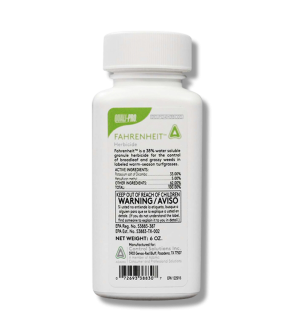
For warm-seasoned turf we recommend using Fahrenheit Herbicide to control trumpet vines. All other listed application sites such as cool-seasoned turf or concrete areas where trumpet vines are growing will do well with Eraser 41% Glyphosate.
Keep in mind this product is non-selective meaning it will any plant is applied too.
For more established trumpet vines that become trees, we recommend performing a stump treatment with Eraser 41%.
Step 1: Mix and Apply Herbicides
Fahrenheit Herbicide is a water dispersible granule herbicide that controls broadleaf and grassy weeds like trumpet vines (known as trumpet creeper on label) in warm-seasoned turf.
For spot applications with Fahrenheit Herbicide, use 0.2 oz. of product per 1 gallon of water per 1,000 sq. ft.
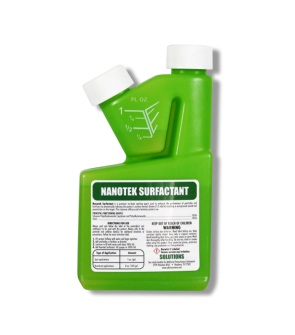
To enhance the performance of your herbicide we recommend using a non-ionic surfactant. Nanotek Surfactant is a non-ionic surfactant that greatly enhances the penetration and coverage of herbicide and insecticide material.
Just mix 1 oz. of Nanotek Surfactant per 1 gallon of spray solution.
Eraser 41% Glyphosate is a non-selective herbicide that will control any foliage it is contacted too within sites such as but not limited to lawns, fences, and around buildings.
To remove trumpet vines with Eraser 41% Glyphosate, perform a spot treatment. Simply use 2 1/2 oz. (5 tbs) of Eraser 41% Glyphosate per 1 gallon of water per 300 sq. ft.
Determine how much herbicide to use by measuring the square footage of the treatment area. To do this, measure the length and width of the treatment area in feet then multiply them together (length X width = square footage).
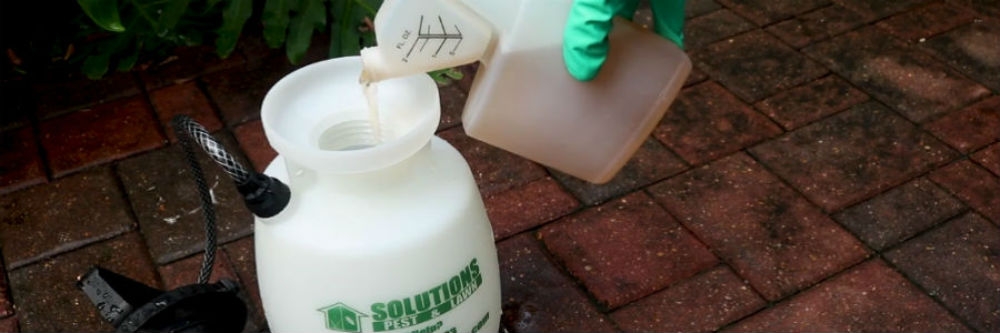
We recommend you mix and apply either of these herbicides in a handheld pump sprayer.
Be sure to mark the sprayer used for Eraser 41% Glyphosate for non-selective herbicide use. Only to prevent cross-contamination in the future.
To mix simply pour in half the amount of water then add the measured amount of herbicide. Next, pour in the remaining half of water and close the tank lid. Agitate the spray tank until the solution is evenly mixed.
Spot-treat any weed you have found during your inspection. Use a fan or cone spray pattern to ensure the leaves are fully coated, and spray the weed to the point of wet but not runoff.
To kill trumpet vines growing up a pole, fence or mature tree trunk, cut the vine to a height of 3 to 4 feet and spray thoroughly covering remaining vine.
If the vine is climbing a shrub or immature (green) tree trunk, to avoid damage to these plants, cut vine at base and treat as directed for stumps or spray regrowth.
To do a stump treatment with Eraser 41% Glyphosate, you will need to cut the stump close to the soil surface. Make 4-5 nail holes into the stump.
Next flood the stump with the undiluted product. Be sure to use this product within the next 5 minutes after cutting of trees.
Step 2: Retreat if Necessary

When applied properly, affected weeds will yellow and begin to die. Trumpet vines treated with Eraser 41% Glyphosate may show signs of injury within 2-4 days, but may take up to 4 weeks for total weed death.
Conduct follow-up applications with Fahrenheit Herbicide when 4 to 6 weeks have passed after application.
A second application can be done with Eraser 41% Glyphosate when 4 weeks have passed after application.
Prevention
 Once trumpet vine has been eliminated from your property, you will need to implement some preventative measures which will ensure that this weed does not return.
- Pruning after trumpet vines have bloomed is essential to keeping it in from spreading and reseeding. You can also cut the vine from the ground to help stop it from growing.
- Consistently rake or pick-up fallen plant debris as trumpet vines can regrow from fragments of the roots and leftover wood material.
- Completely remove the stumps of dead trumpet vines from the ground until roots are exposed.
- Mow your grass at proper intervals to maintain a thick growing density. A lawn dense with taller trimmed grass is better able to choke out weeds and other unwanted weeds like trumpet vine and prevent them from establishing.
Key Takeaways
What is Trumpet Vines?
- Trumpet vines are woody broadleaf weeds with flowering vines that some consider aesthetic, but can spready quickly.
How to Get Rid of Trumpet Vines
- To get rid of trumpet vines, we recommend using Fahreneheit Herbicided mixed with Nanotek Surfactant or Eraser 41% Glyphosate.
Preventing Trumpet Vines Reinfestations
- Prevent trumpet vines from regrowing by pruning them early in their developing stages and regular maintenance throughout your yard.