



Gain access to personalized product screening, the best pricing, rewards, and more!
Create An Account, Or Sign In.


Your Product Analysis:
Home
Grass
Property
Kids or Pets
You Need:
$5.00
For your -- home1
Your Cost:
Your Cost:
$5.00
Price per
application2
application2
GOWAN
Sedgehammer Nutsedge Killer
Sedgehammer is a selective herbicide that provides excellent post-emergent control over yellow nutsedge, purple nutsedge, and other tough broadleaf weeds in lawns, turfgrass, and landscaped areas.
As low as
$11.83
Only %1 left
SKU
Sedgehammer Product Page
Min : 11.83 - Max : 55.47

+

+
Price as of
08/20/26
08/20/26
Price Transparency
See how our pricing compares to other online retailers for this item.
Sedgehammer (also known as Sedgehammer Plus or Sedgehammer+), manufactured by Gowan, is a selective, post-emergent herbicide formulated with halosulfuron-methyl to control nutsedge and other broadleaf weeds.
Sedgehammer comes in two different versions: Sedgehammer and Sedgehammer Plus.
Sedgehammer comes in a bottle and is used for treating large areas. It has a higher concentration of halosulfuron-methyl at 75%. It must be mixed with a surfactant. Sedgehammer Plus comes in pre-measured packets that are used for treating smaller areas. Each packet has a surfactant mixed in with the product and can treat 1,000 square feet. The amount of active in this version is 5% halosulfuron-methyl.
Both versions of Sedgehammer are safe weed killers in lawns mixed in water to create a spray. When applied to the leafy tissue of targeted weeds, the solution moves down to the roots to eliminate the plant. Sedgehammer is ideal to use on residential, commercial, and industrial areas.
Tools Needed
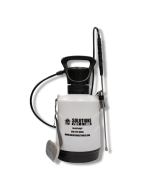
To apply Sedgehammer, a backpack sprayer, hand pump sprayer, or a professional spray rig is needed. For small volume areas, we recommend using a hand pump sprayer.
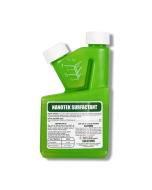
If you are using the Segehammer Nutsedge Killer 1.3 oz, you will need to use a surfactant with it such as Nanotek Surfactant.
How to Use

- Step 1: Determine how much Sedgehammer Nutsedge Killer or Sedgehammer Plus to use by measuring the square footage of the treatment area. You can do this by measuring the length and width of the treatment area then multiplying them together (length X width = square footage). Spot treatments in turfgrass with Sedgehammer Nutsedge Killer 1.3 size, use 0.9 gram of this product with in 1-2 gallons of water per 1,000 sq. ft. Add 2 tsp (1/3 fl. oz.) of nonionic surfactant per gallon of water. Broadcast applications in turfgrass with Sedgehammer Nutsedge Killer 1.3 size, apply 2/3 to 1 1/3 oz. of product per 100 gallons of water per acre. Turfgrass applications with the Segehammer Plus 13.5 gram will use 1 of the 0.9 gram water soluble bag of this product per 1-2 gallons of water per 1,000 sq. ft. You do not need to mix in a surfactant with Sedgehammer Plus.
- Step 2: After measuring the amount of Sedgehammer you will need, you can begin to create your solution. Fill your spray tank with half the amount of water, then add the measured amount of Sedgehammer Nutsedge Killer or the right amount of opened packets of the Sedgehammer Plus. If you are using the 1.3 bottle size then add the measured amount of non-ionic surfactant. Lastly, pour the remaining half of water and stir or shake thoroughly for 2 minutes until the product contents and surfactant are completely dispersed.
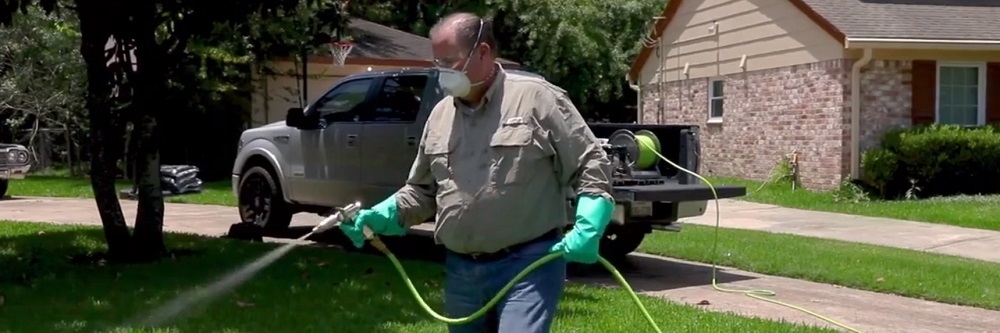
- Step 3: After diluting your Sedgehammer in water, you can begin applying your mixed solution. On a fan spray setting, spray the target weeds thoroughly until wet, but not to the point of runoff. A second treatment may be needed 6 to 10 weeks after your initial treatment. For best results, do not mow turf 2 days before or 2 days after application.
Where to Use
Sedgehammer Nutsedge Killer and Sedgehammer Plus can be applied to nutsedge and other weeds in established lawns, ornamental turfgrass, landscaped areas, commercial and residential turf and on other non-crop sites including: airports, campgrounds, cemeteries, fairgrounds, fence rows, fallow areas, fuel storage areas, golf courses, landscaped areas, established woody ornamentals in landscape areas, lumberyards, public recreation areas, race tracks, residential property, rights-of-way, roadsides, school grounds, sod or turf seed farms, sports fields, tank farms and tennis courts.
Do not apply either of these product to golf course putting greens, and do not spray over the top of desirable flowers, ornamentals, vegetables, shrubs, trees, or vascular plants.
When to Use
Apply Sedgehammer Nutsedge Killer or Sedgehammer Plus when weeds are actively growing and have emerged from labeled sites.
These products can be applied when the turf has not been mowed for at least 2 days before application, and do not mow 2 days after application. Do not use these products when rainfall is forecasted to occur within 4 hours of application.
When controlling nutsedges, do not apply if either the turfgrass or nutsedges are under stress.
Safety Information
Sedgehammer Nutsedge Killer and Sedgehammer Plus is safe to use around children and pets when applied according to the product label instructions. Always wear the proper personal protective equipment when mixing and applying this product.
Keep people and pets out of treated areas until the spray solution has dried.
Special Considerations
Be aware of which version of Sedgehammer you are using. Only Sedgehammer Plus contains a non-ionic surfactant. If you are using the bottled version of Sedgehammer, you will need to mix the solution with a product like Nanotek Surfactant to ensure the solution sticks to the weeds you want to control.
Do not replant sunflowers until 18 months have passed after application.
| Restricted Use | No |
|---|---|
| Shipping Restrictions | AK |
| Availability | Online |
| Signal Word | CAUTION |
| Keith's Pro Tip | "Nutsedge has a root system made with tubers, also known as nutlets. Every time the roots system is broken, a new sprout appears. This means that when nutsedge weeds are pulled without the entire root system, more grows in its place, essentially causing the problem to get worse." |
| Target Pests Multi | Burcucumber, Cocklebur, Common Groundsel, Common Milkweed, Common Pokeweed, Common Ragweed, Common Sunflower, Corn Spurry, Fleabane, Galinsoga, Giant Ragweed, Green Kylinga, Honeyvine_Milkweed, Ivyleaf Morningglory, Jimsonweed, Kochia, Ladysthumb, Lambsquarters, Pennsylvania Smartweed, Purple Nutsedge, Purslane, Redroot Pigweed, Rice Flatsedge, Shepherdspurse, Smooth Pigweed, Tall Morningglory, Velvetleaf, Venice Mallow, Wild Mustard, Wild Radish, Yellow_Nutsedge |
| Time to Kill | Visual results should be seen in 14 to 21 days. You may need to reapply 6 to 10 weeks after your initial treatment. |
| Chemical Type | Herbicide |
| Formulation | Water Dispersible Granule (WDG) |
| Application Methods | Broadcast Spray, Crack & Crevice, Spot Treatment |
| Product Drawbacks | Sedgehammer will damage vascular plants, such as ferns or tomato plants. When applying Sedgehammer be sure to avoid over spray on vascular plants by using a cone on the spray wand or covering non-targeted plants. |
| Active Ingredient | Halosulfuron-methyl 75.0% |
| Application Equipment | Backpack Sprayer, Gloves, Pump Sprayer, Spray Rig |
| Mix Rate | For large volume applications, use between 0.6 and 1.3 fluid ounces per acre. The amount of water used will vary. For small volume applications, use 1 packet per gallon of water per 1,000 square feet. |
| Use Sites | Outdoors |
| Yield | A 1-gallon mixture of Sedgehammer Plus will cover 1,000 square feet. |
| EPA Registration No. | 81880-1-10163 |
| Shelf Life | Sedgehammer will last for up to 1 to 2 years when stored according to the product label. Store Sedgehammer in a cool, dry storage area. |
| Comparable Products | Sedgemaster Herbicide |
| Children or pets? | No |
| Property Characteristics | None |
| Availability | Online |
| Restricted Use | No |
| Brand | GOWAN |
| Keith's Pro Tips | "Nutsedge has a root system made with tubers, also known as nutlets. Every time the roots system is broken, a new sprout appears. This means that when nutsedge weeds are pulled without the entire root system, more grows in its place, essentially causing the problem to get worse." |
| Product Drawbacks | Sedgehammer will damage vascular plants, such as ferns or tomato plants. When applying Sedgehammer be sure to avoid over spray on vascular plants by using a cone on the spray wand or covering non-targeted plants. |
| Target Pests | Annual Kylinga, Burcucumber, Cocklebur, Common Groundsel, Common Milkweed, Common Pokeweed, Common Ragweed, Common Sunflower, Corn Spurry, Galinsoga, Giant Ragweed, Green Kylinga, Honeyvine Milkweed, Ivyleaf Morningglory, Jimsonweed, Kochia, Ladysthumb, Lambsquarter, Pennsylvania Smartweed, Philadelphia Fleabane, Purple Nutsedge, Purslane, Redroot Pigweed, Rice Flatedge, Shepards Purse, Smooth Pigweed, Tall Morningglory, Velvetleaf, Venice Mallow, Wild Mustard, Wild Raddish, and Yellow Nutsedge |
| Application Equipment | Backpack Sprayer, Gloves, Pump Sprayer, Spray Rig |
| Application Methods | Broadcast Spray, Crack & Crevice, Spot Treatment |
| Active Ingredient | Halosulfuron-methyl 75.0% |
| Product Type | Herbicide |
| Formulation | Water Dispersible Granule (WDG) |
| Application Rate | For large volume applications, use between 0.6 and 1.3 fluid ounces per acre. The amount of water used will vary. For small volume applications, use 1 packet per gallon of water per 1,000 square feet. |
| Shelf Life | Sedgehammer will last for up to 1 to 2 years when stored according to the product label. Store Sedgehammer in a cool, dry storage area. |
| Yield | A 1-gallon mixture of Sedgehammer Plus will cover 1,000 square feet. |
| Use Sites | Outdoors |
| Time to Kill | Visual results should be seen in 14 to 21 days. You may need to reapply 6 to 10 weeks after your initial treatment. |
| Comparable Products | Sedgemaster Herbicide |
| EPA Registration # | 81880-1-10163 |
